Gallery
Spinning Jenny
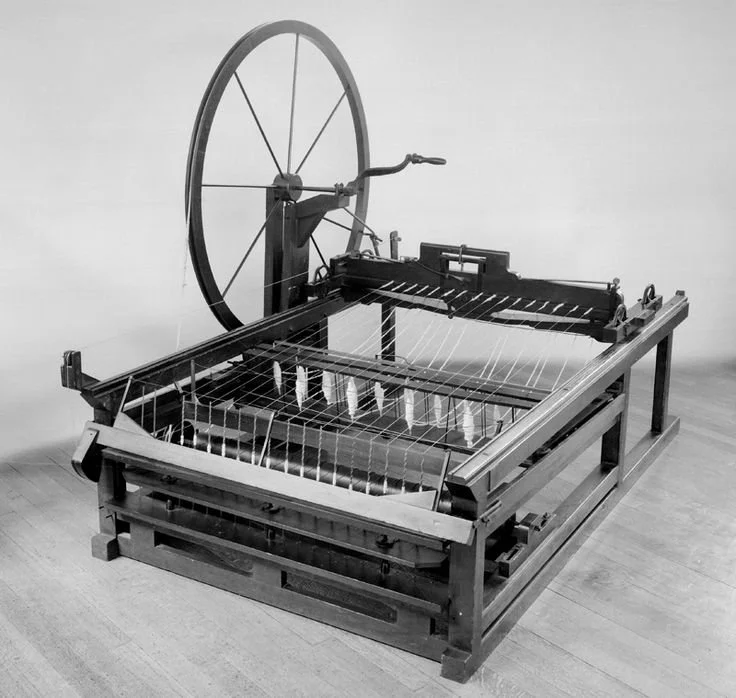
The Spinning Jenny, invented by James Hargreaves around 1764, was one of the first major inventions of the Industrial Revolution. Before its invention, textile workers could spin only one thread at a time using a traditional spinning wheel. The Spinning Jenny allowed a single worker to spin multiple spools of thread simultaneously, dramatically increasing the production of yarn while reducing labor costs. This innovation helped satisfy the growing demand for textiles and encouraged the expansion of factories throughout Britain. Although early models were operated by hand, the machine represented a major step toward mechanized manufacturing. The Spinning Jenny transformed the textile industry by improving efficiency and productivity, making cloth more affordable and helping establish the factory system that became the foundation of industrial society.
Water Frame
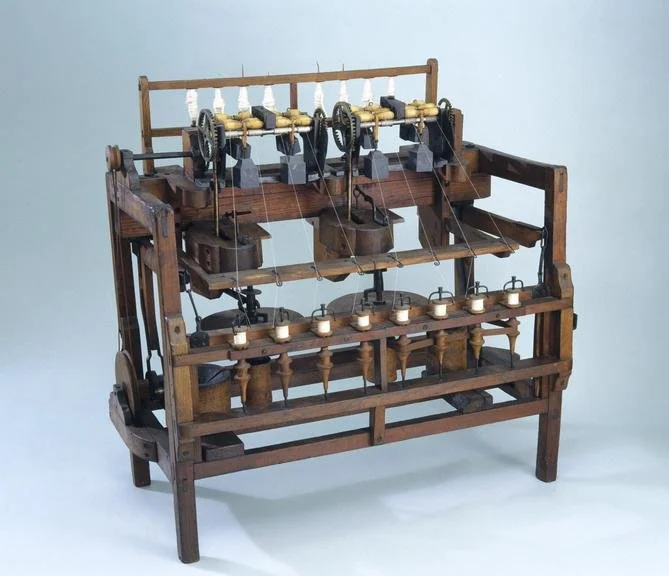
The Water Frame, patented by Richard Arkwright in 1769, revolutionized textile manufacturing by using waterpower to drive spinning machines. Unlike the Spinning Jenny, which produced relatively weak thread, the Water Frame created stronger and more durable cotton yarn suitable for high-quality fabrics. Because the machine required a constant supply of flowing water, factories were built near rivers, leading to the development of large industrial mills. The Water Frame also encouraged the movement of production from homes to centralized factories, where workers operated machines under one roof. This invention significantly increased textile output while lowering production costs. The Water Frame became one of the most important technologies of the Industrial Revolution and helped establish Britain as the world's leading producer of cotton textiles.
Steam Engine
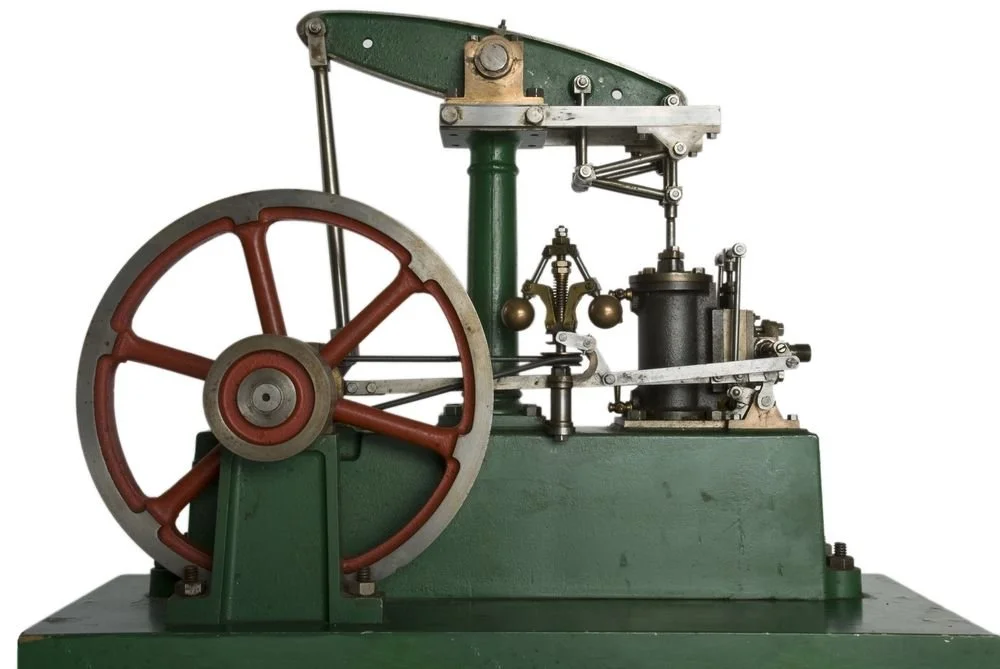
James Watt's improved steam engine, introduced during the late eighteenth century, became one of the most influential inventions of the Industrial Revolution. Earlier steam engines were inefficient and consumed large amounts of fuel, but Watt's separate condenser greatly improved their performance while reducing energy waste. Steam engines could power factories, mines, mills, and transportation systems without relying on rivers or wind. This allowed industries to expand into cities and operate year-round regardless of weather conditions. The widespread use of steam power increased manufacturing output, lowered production costs, and accelerated economic growth across Europe and North America. Watt's innovations laid the foundation for modern industrial machinery and played a critical role in transforming agriculture, transportation, and manufacturing during the nineteenth century.
Cotton Gin
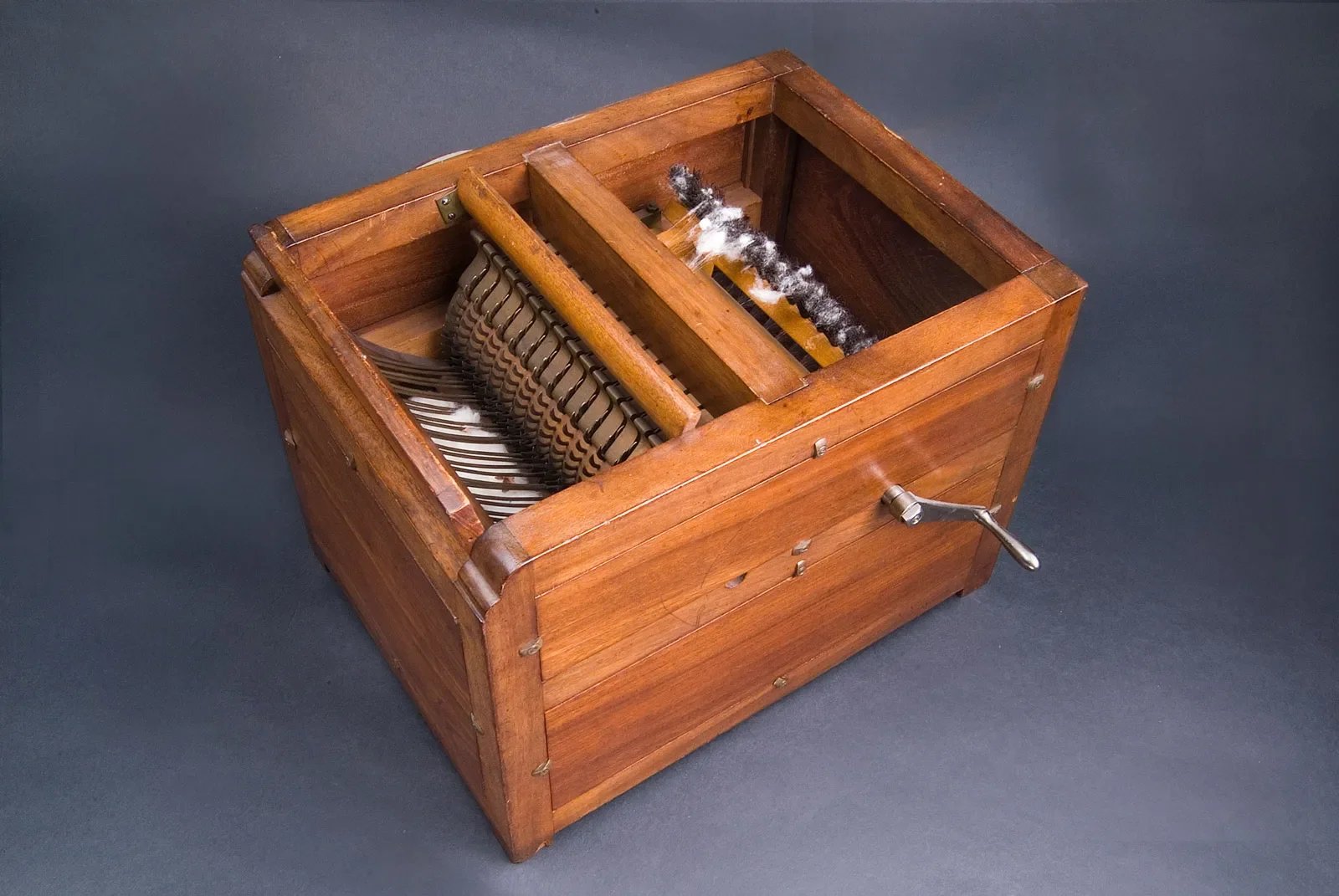
Invented by Eli Whitney in 1793, the Cotton Gin dramatically increased the efficiency of cotton processing by quickly separating cotton fibers from their seeds. Before its invention, workers removed seeds by hand, making cotton production slow and labor-intensive. Whitney's machine allowed a single worker to clean far more cotton in one day than was previously possible, making cotton one of America's most profitable crops. The invention helped fuel the growth of the textile industry by providing factories with abundant raw cotton. However, it also contributed to the expansion of slavery in the southern United States because plantation owners increased cotton production to meet rising demand. The Cotton Gin remains one of the most influential agricultural inventions in American history due to its lasting economic and social impact.
Power Loom
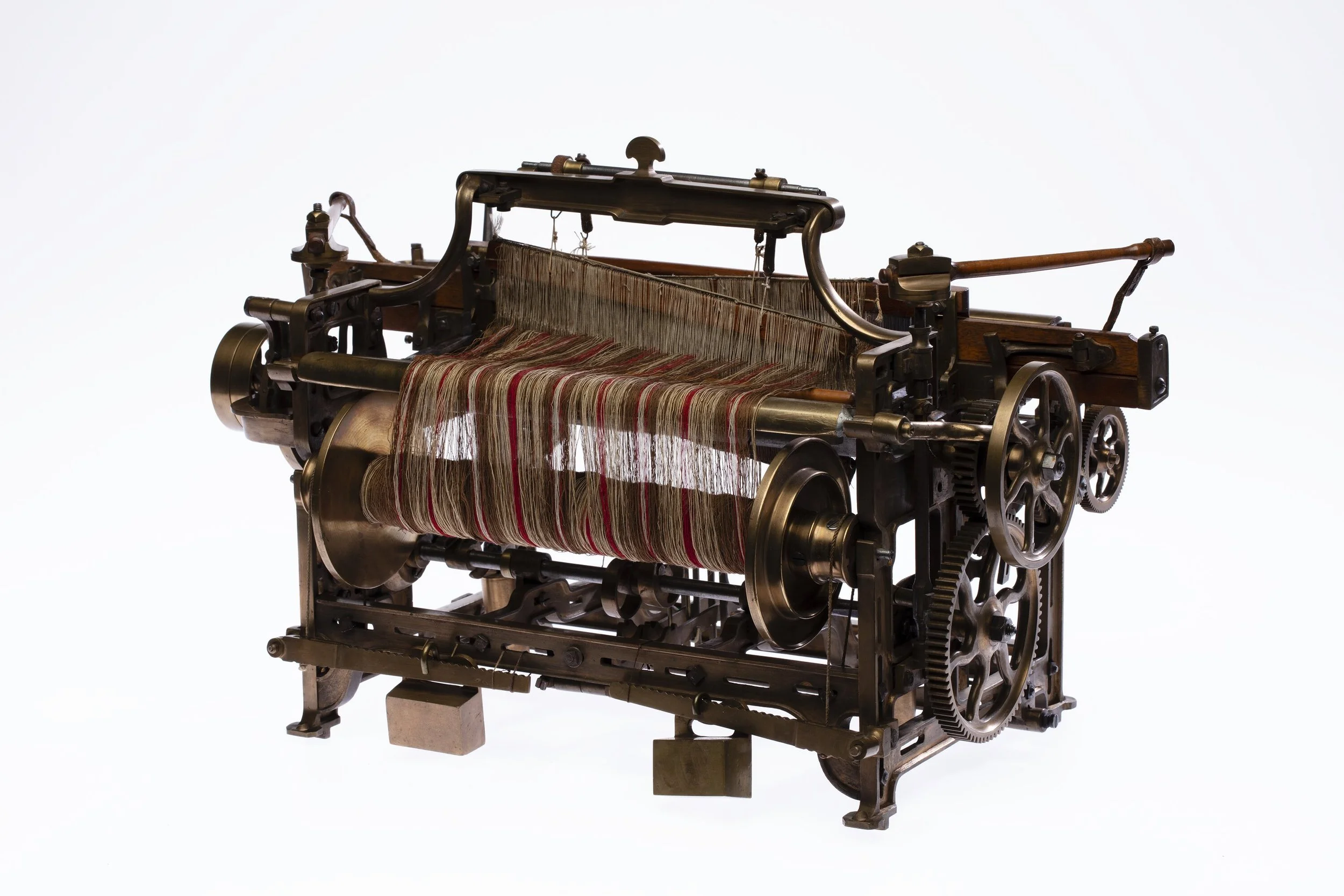
The Power Loom, developed by Edmund Cartwright in 1785, mechanized the weaving process and transformed textile manufacturing. Before its invention, weaving was performed manually by skilled workers using hand-operated looms. The Power Loom used mechanical power, eventually driven by steam engines, to weave cloth much faster and more consistently than human labor. This innovation greatly increased factory productivity while lowering the cost of producing textiles. Although many hand weavers initially opposed the machine because it threatened their livelihoods, the Power Loom eventually became standard equipment in textile mills throughout Britain and beyond. Its widespread adoption helped expand factory production, encouraged urban industrial growth, and made affordable clothing available to a much larger portion of the population.
Stephenson's Rocket Locomotive
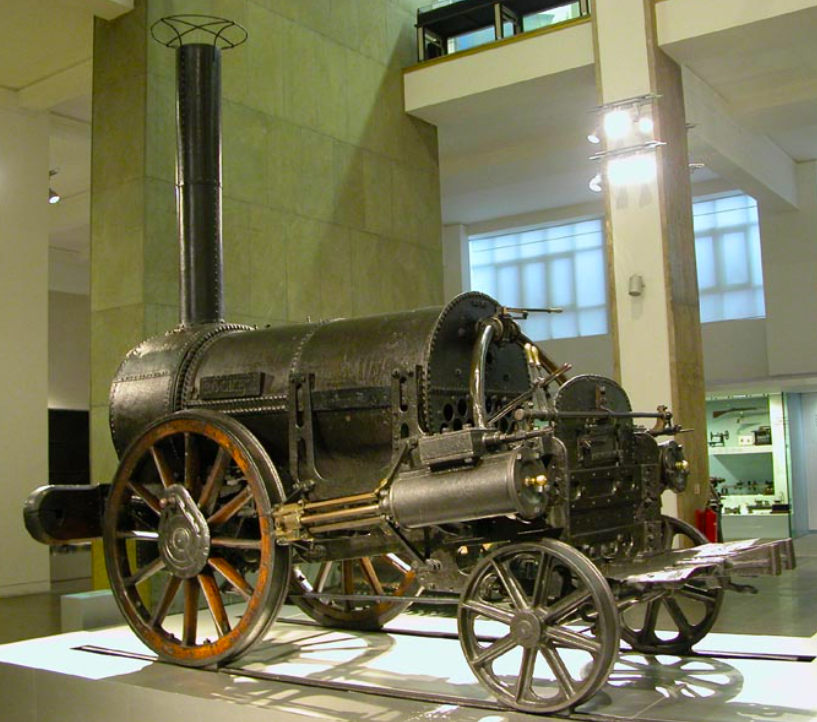
Stephenson's Rocket, designed by George Stephenson and his son Robert in 1829, became one of the world's most famous early steam locomotives. Built for the Rainhill Trials in England, the Rocket demonstrated that steam-powered rail transportation could be fast, reliable, and commercially successful. Its innovative boiler design improved efficiency and allowed it to travel at unprecedented speeds for its time. The success of the Rocket encouraged the rapid construction of railroads throughout Britain, Europe, and North America. Railroads revolutionized transportation by moving people and goods more quickly and cheaply than canals or horse-drawn wagons. Stephenson's Rocket became a symbol of industrial progress and helped launch the global railway age that transformed commerce and communication.
Steamship
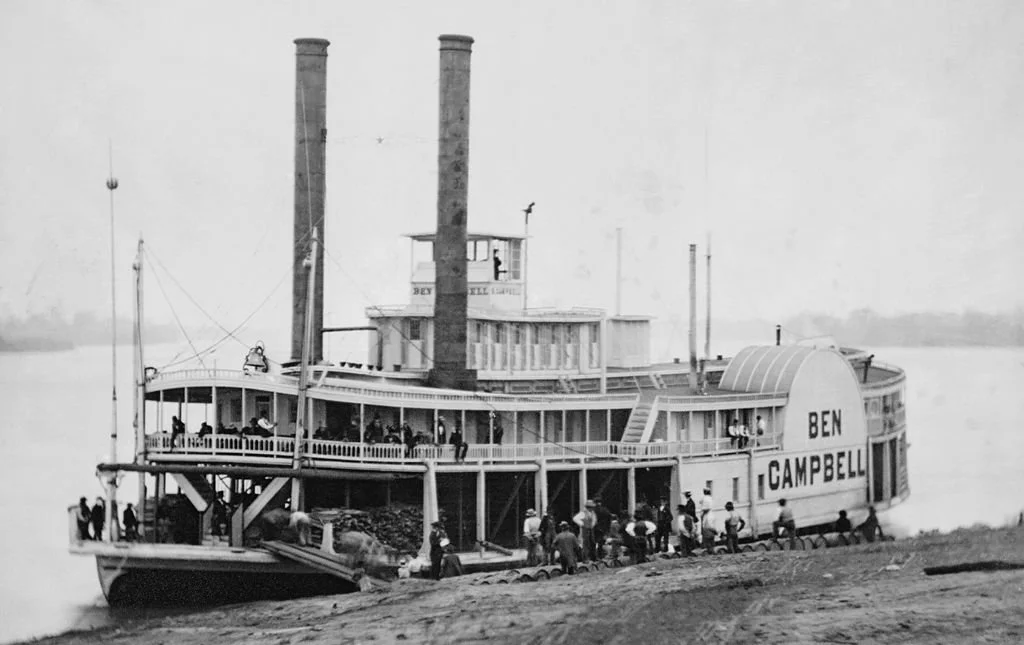
Early steamships revolutionized water transportation by replacing traditional sailing vessels that depended on favorable winds. Powered by steam engines and paddle wheels, these ships could travel more consistently and maintain regular schedules regardless of weather conditions. During the nineteenth century, steamships dramatically improved trade, immigration, and communication by reducing travel times across rivers, lakes, and oceans. They played an important role in expanding international commerce and connecting distant markets during the Industrial Revolution. Steamships also transported raw materials to factories and finished products to consumers more efficiently than ever before. Their development marked a major advancement in transportation technology and contributed significantly to the growth of global trade and industrial economies.
Telegraph

The electric telegraph, developed by Samuel Morse and others during the 1830s and 1840s, transformed communication by allowing messages to travel almost instantly across long distances. Before the telegraph, information could only move as quickly as people or transportation allowed. Using electrical signals transmitted through wires, telegraph operators communicated messages in Morse code, greatly improving the speed of business, government, military operations, and journalism. Telegraph lines were often built alongside railroad tracks, creating an extensive communication network across countries. This invention helped coordinate transportation, improve emergency responses, and connect communities like never before. The telegraph became the foundation of modern electronic communication and paved the way for later technologies such as the telephone, radio, and the internet.
Factory Textile Machine
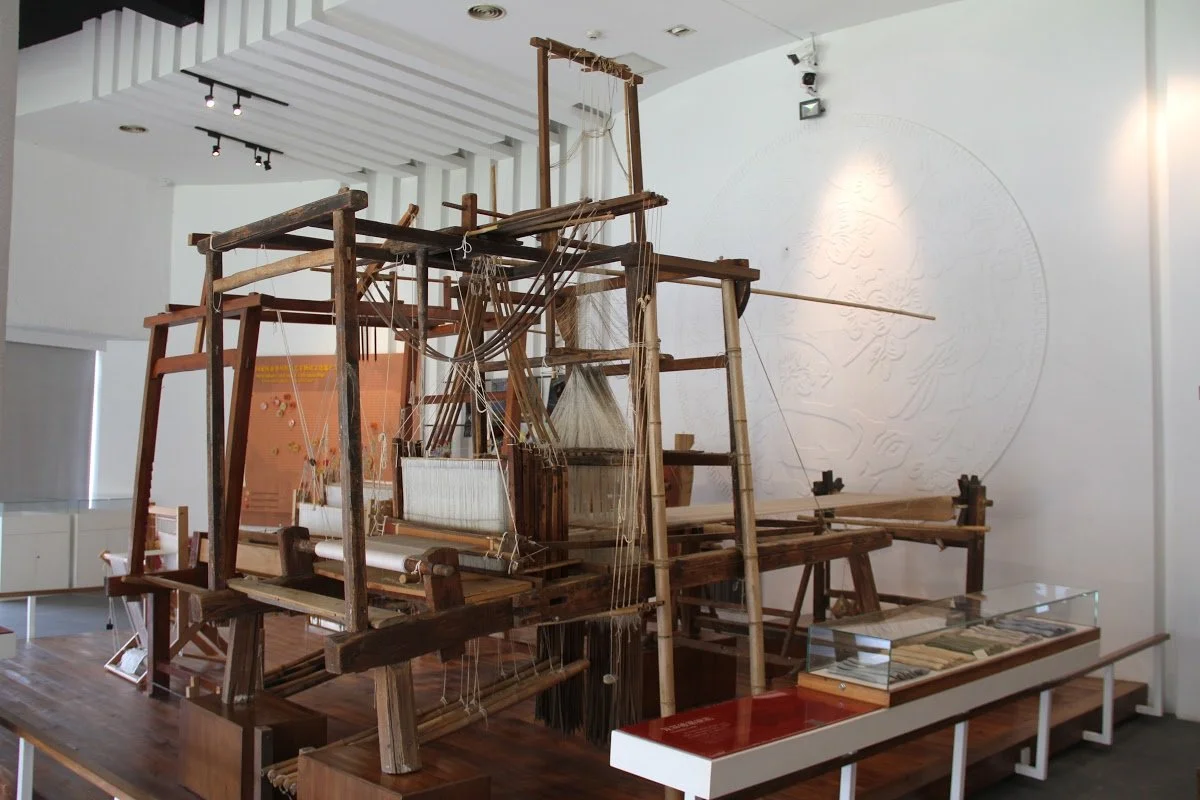
Factory textile machines became symbols of the Industrial Revolution because they allowed manufacturers to produce cloth on a massive scale. These machines combined spinning, weaving, and other textile processes within large factories where workers operated mechanical equipment powered by water or steam. Compared with traditional hand production, factory machines greatly increased efficiency, reduced manufacturing costs, and produced consistent, high-quality fabrics. The growth of textile factories encouraged rapid urbanization as workers moved from rural communities to industrial cities seeking employment. While factory work often involved long hours and difficult conditions, these machines permanently transformed manufacturing and consumer markets. Factory textile machinery demonstrated how mechanization could reshape industries and became one of the defining technologies of the nineteenth century.
Bessemer Converter
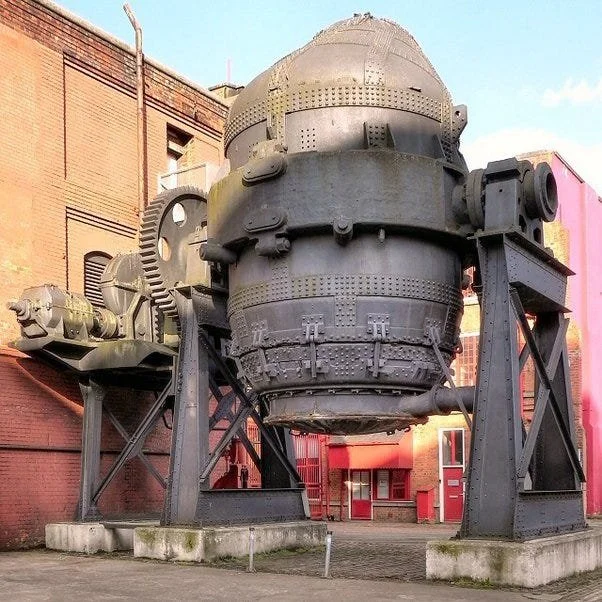
The Bessemer Converter, invented by Henry Bessemer in 1856, revolutionized steel production by making it faster, cheaper, and more efficient. The converter forced air through molten iron to remove impurities, producing strong, high-quality steel in much less time than earlier methods. This innovation dramatically reduced the cost of steel manufacturing and allowed industries to produce large quantities for construction and engineering projects. Bessemer steel became essential for building railroads, bridges, factories, ships, and skyscrapers during the late nineteenth century. The availability of affordable steel accelerated industrial expansion and urban development throughout Europe and the United States. The Bessemer Converter remains one of the most significant technological breakthroughs of the Industrial Revolution because it transformed modern infrastructure and manufacturing.